

The Venue


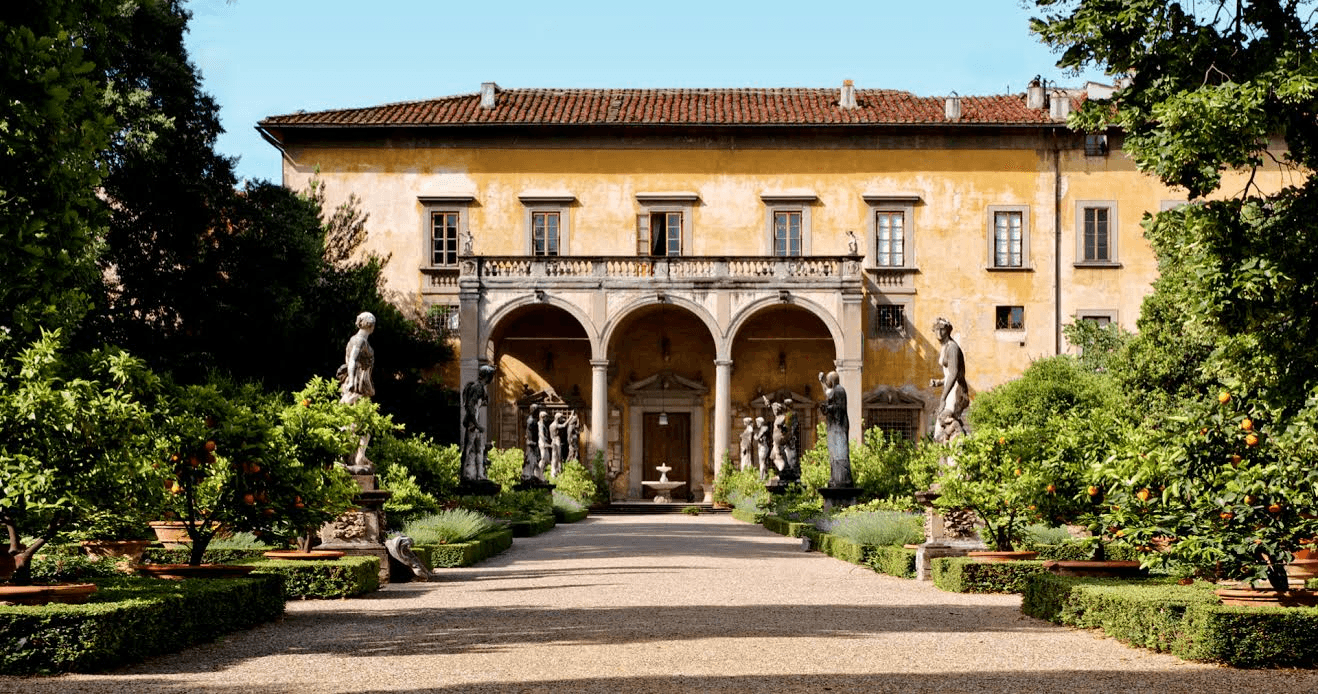
Palazzo Corsini al Prato
The glorious spaces of the New Generation Foundation at the Palazzo Corsini al Prato are situated in a 16th-century palace in the grounds of one of Florence’s largest and most beautiful private gardens, offering various options that are suitable for a wide range of corporate and private events.Conveniently located close to Florence’s Santa Maria Novella train station, the Palazzo offers splendour, beauty and tranquility away from the hustle and bustle of the city. All of the rooms are naturally lit and several are decorated with fine frescoes.Our largest space is the recital hall, a bright and airy room which provides the perfect blank canvas to style as you wish for photoshoots, product launches, cocktail receptions, dinners, conferences and seminars. The Palazzo’s gardens, the Giardino Corsini, together with its Orangeries, are also available to hire for special events.
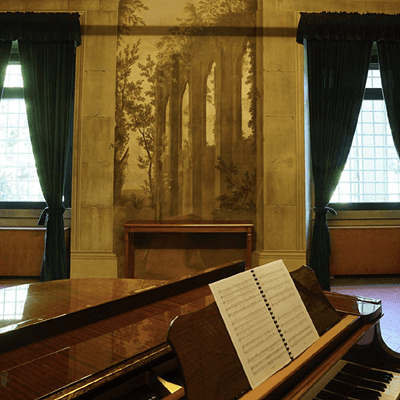
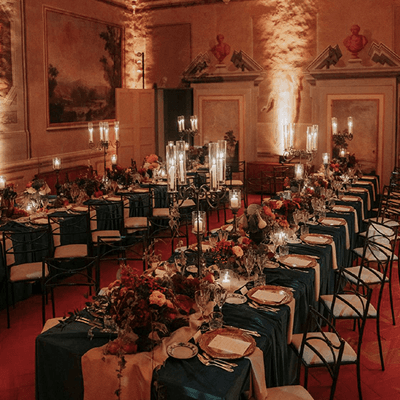
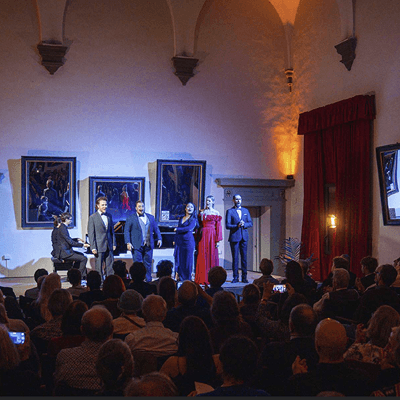
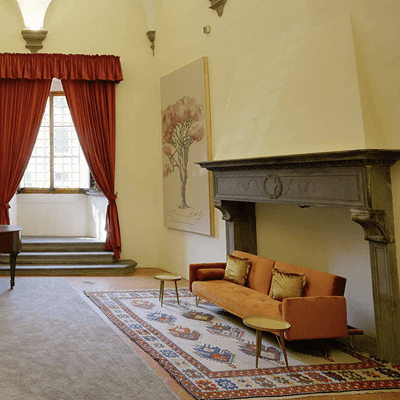
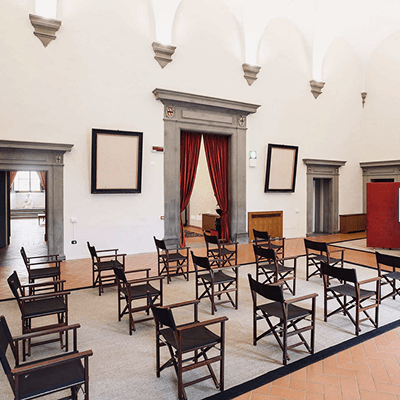
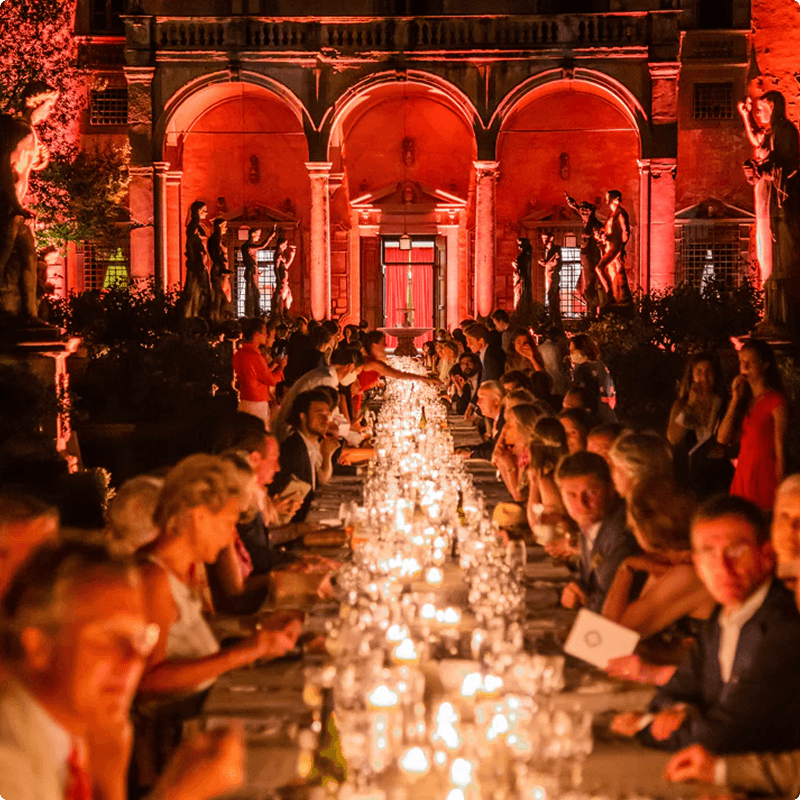
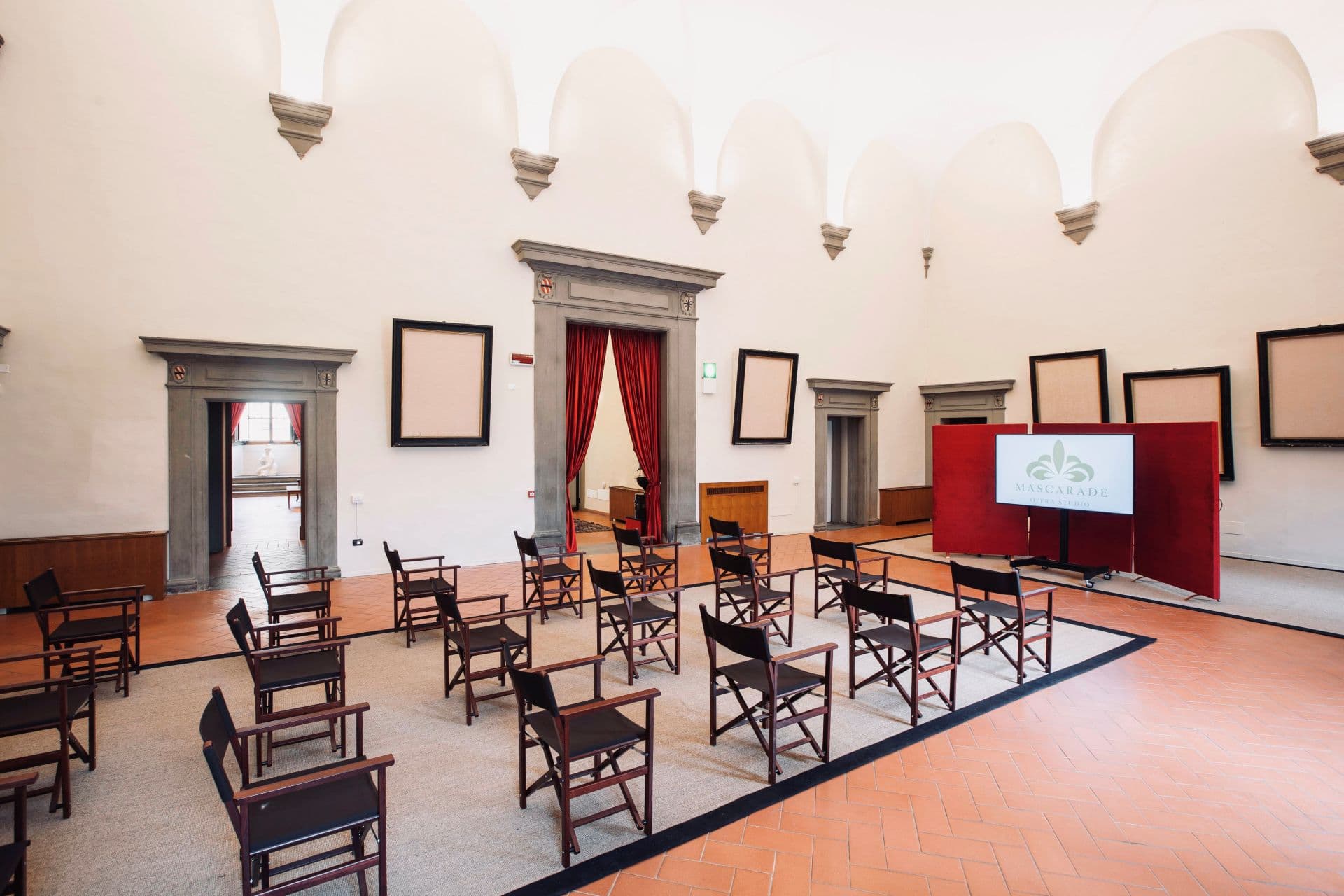
The spacious recital hall is the perfect place for concerts, conferences, product launches, receptions and dinners. Flooded with light during the day, it becomes an atmospheric reception venue in the evening.

The Sala Palme has two large windows at the front of the Palazzo, providing plenty of natural light.

The romantic frescoes in the villa’s Sala Walter Scott create a particularly inspiring backdrop.Perfect for photoshoots, interviews or brainstorming sessions as well as dinners, this room is situated at the back of the Palazzo, overlooking the gardens.

Situated at the front of the Palazzo with two large windows, this room is named after its beautiful fireplace.Elegantly-proportioned with high ceilings, this room lends itself to concerts, seminars and medium-sized gatherings.

The Library is a gracious, light-filled room with two large windows overlooking the gardens.This flexible space with an elegantly painted ceiling can be used for various events and workshops.
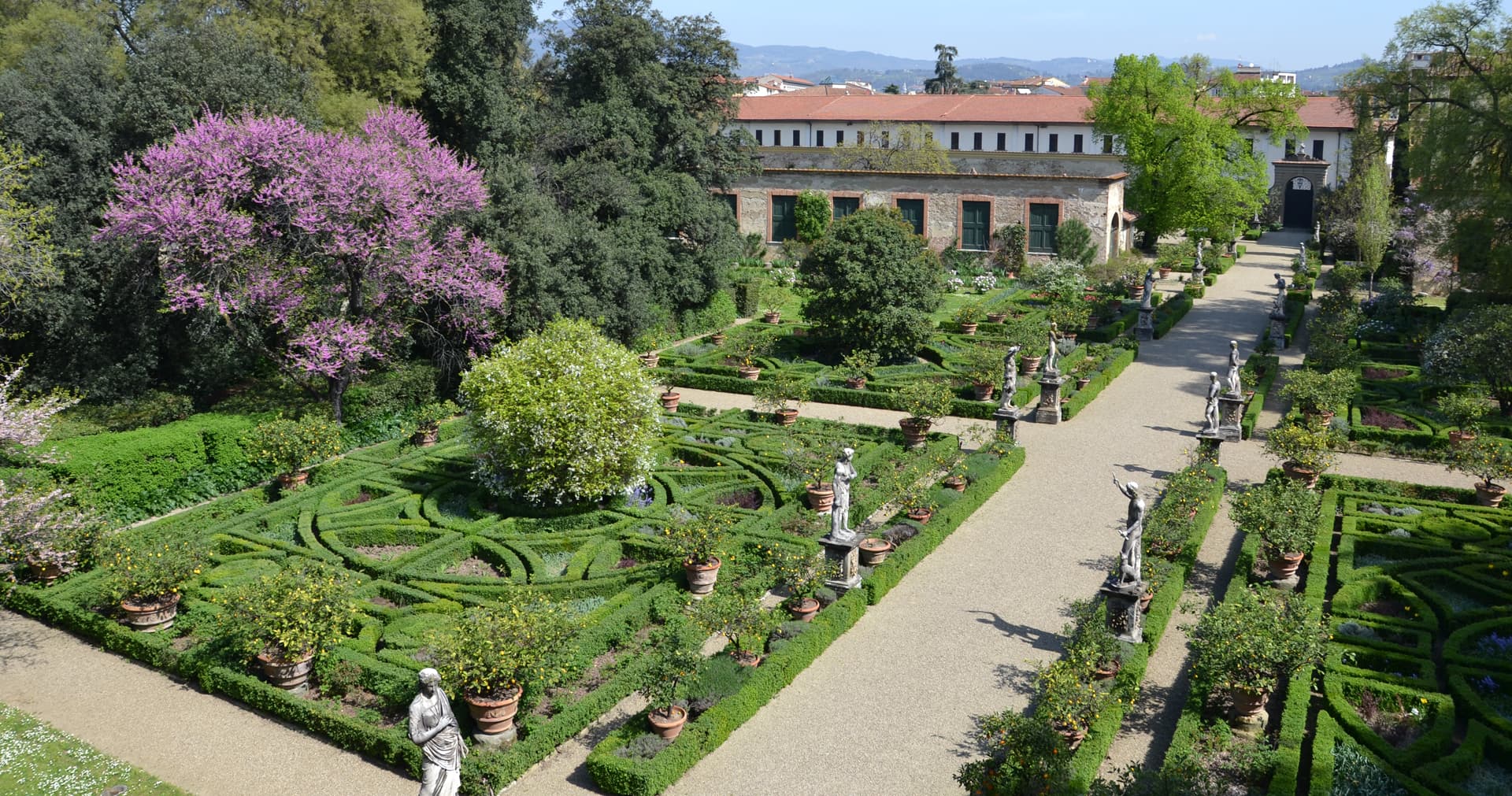
The gardens are available to hire for special events. Please contact us for further details.

One of the palazzo’s great orangeries – the perfect long space for concerts, grand dinners and conferences.
The History
Concealed behind the façade of one of the palaces along what was known as the Prato di Ognissanti is one of Florence’s finest gardens. In 1591, having purchased land along the Prato d’Ognissanti, Alessandro Acciaiuoli asked Bernardo Buontalenti to design a “pleasure lodge” with extensive grounds.
Buontalenti designed the complex hydraulic system to bring water to the fountains, with the pathways lined with sumptuous rows of cedars, the loggia and large “inginocchiata” (or kneeling) windows that can still be seen today. In that era, the garden also contained the famous “statues of the four seasons” that stand today at either end of the Santa Trinità bridge: Summer and Autumn by Giovanni Caccini, Spring by Pietro Francavilla and Winter by Cristofano Stati. The Acciaiuoli garden also contained another major piece, the Bacchus by Giambologna, which can be found today at the Bargello Museum.
Following the purchase in 1620 by Filippo and Maddalena Corsini in the wake of the bankruptcy of the Acciaiuoli family, they assigned the task of finishing the lodge to Gherardo Silvani, who also reworked the layout of the garden. Silvani’s contribution can be seen in a number of details in the spaces on the ground floor, such as the ornamentation in the architectural moldings.
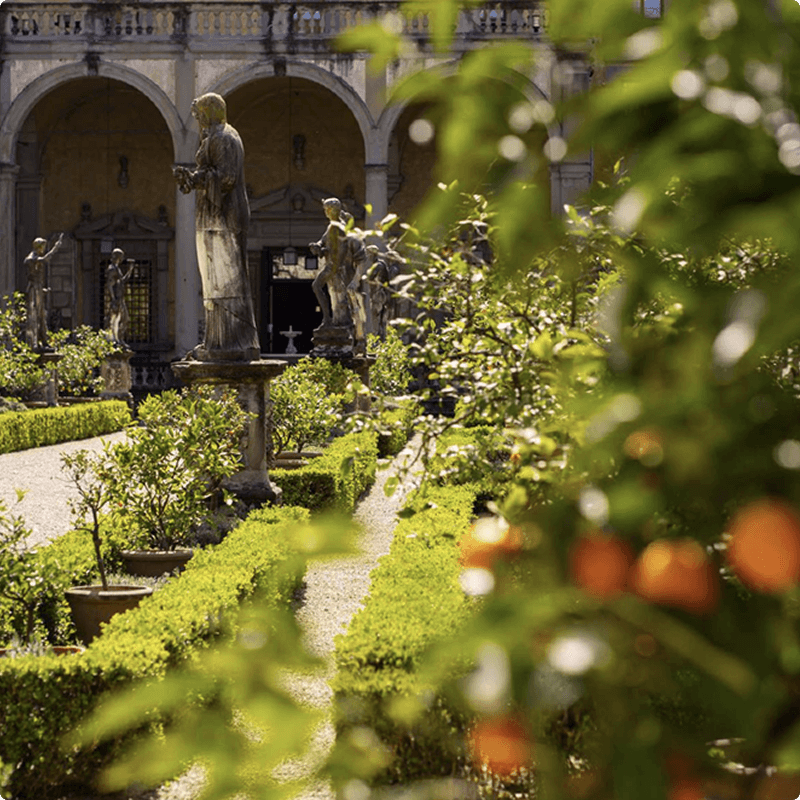
But it is the Italian-style garden – bounded by the large orangeries, with the sophisticated geometrical beds, box hedges, lemon trees in vases and statue-lined main path – that clearly reveals the Baroque-style orientation of the architect and his love of scenography.
To enhance the sense of length and depth of the main path, the architect made use of the trick of placing the statues and their pedestals at a progressively lower height, fixing the central vantage point from the loggia at the back of the palace towards Via della Scala, as is seen in the cherub and two lions above the gate and the side pillars oriented towards the inside.
In 1834 the palace became the residence of Don Neri Corsini and his wife, who commissioned both architectural and ornamental work. During the same period, the garden also underwent a Romantic-style make-over. Wooded groves were created, as well as a knoll and little lake – changes that can still be seen in the two wooded areas that create a sort of scenic green backdrop to the garden. More recently, the garden, with its spring flowering of pink and red cistus, lavender, roses, peonies and ornamental cherry trees, was reworked by Oliva di Collobiano.
Contacts
For further information please contact
v.camaioligiusti@mascaradeopera.comThe New Generation Foundation
Palazzo Corsini al Prato
Florence, Italy